
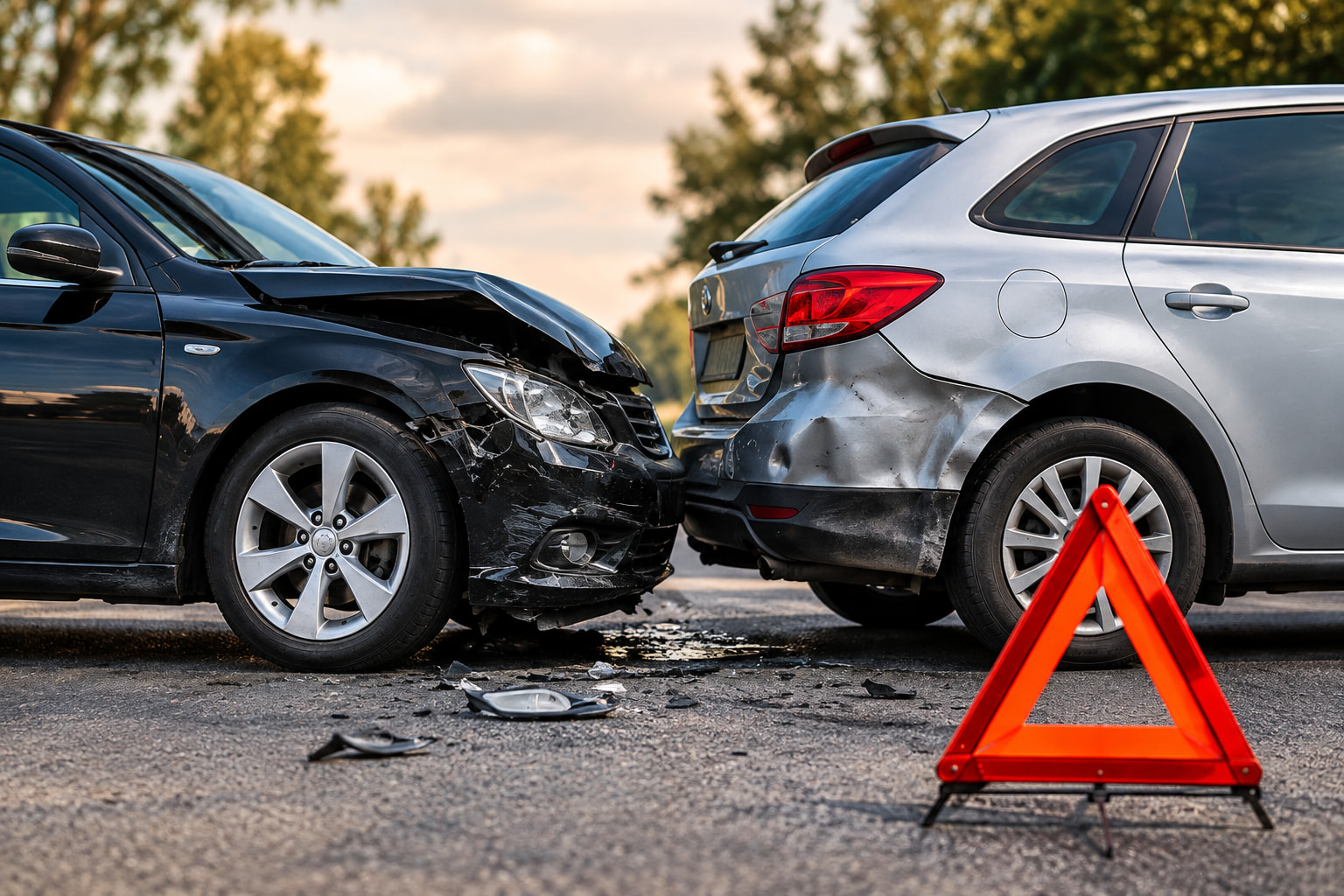
At the scene: make it safe
The first priority is preventing a second incident and getting help to anyone who needs it.
- Stop — leaving the scene of a crash is an offence
- Switch on hazard lights; if it is safe and the vehicles are drivable, move them clear of traffic
- Check yourself and others for injuries; call 000 for anyone hurt, or if a vehicle is blocking traffic or leaking fuel
- Set out a warning triangle if you have one, and stay clear of moving traffic
- Do not stand between or behind vehicles on a live roadway
Exchange and record details
You are generally required to give your name, address and vehicle details to anyone else involved, and to report the crash to police in certain circumstances — for example if someone is injured, a vehicle has to be towed, or another party will not provide their details. Requirements differ between states and territories, so check your local police or road authority guidance.
- Other drivers' names, phone numbers, licence and registration details
- Make, model and colour of each vehicle
- Time, date, location and direction of travel
- Photos of the vehicles, damage, road positions, signage and conditions
- Names and phone numbers of any witnesses
In the days afterwards
Once you are safe and have the other party's details, a few follow-up steps protect you and get the vehicle back on the road properly.
- Report to police within the timeframe that applies where you live, if reporting is required
- Contact your insurer as soon as practical and give them the details you recorded
- For a work vehicle, notify your employer or fleet manager and follow the company's incident process
- Have the vehicle inspected before returning it to service, even if damage looks minor — an impact can affect wheels, suspension and tyres, and a bent wheel or a cracked tyre is not always obvious from the driver's seat
Keep these in the vehicle
A small kit makes the roadside part far less stressful, and most of it fits in the glovebox or a door pocket.
- A pen and paper, or a notes app you can open quickly
- A phone charger or power bank
- A basic first aid kit
- A torch
- A warning triangle or beacon
- Your insurer's claim phone number, saved in your phone and written down
Quick recap
- Stop and switch on hazard lights
- Check for injuries; call 000 if needed
- Move clear of traffic if it is safe to do so
- Exchange details and photograph the scene
- Report to police if that is required where you live
- Contact your insurer, and your fleet manager for a work vehicle
- Get the vehicle checked before driving it again