
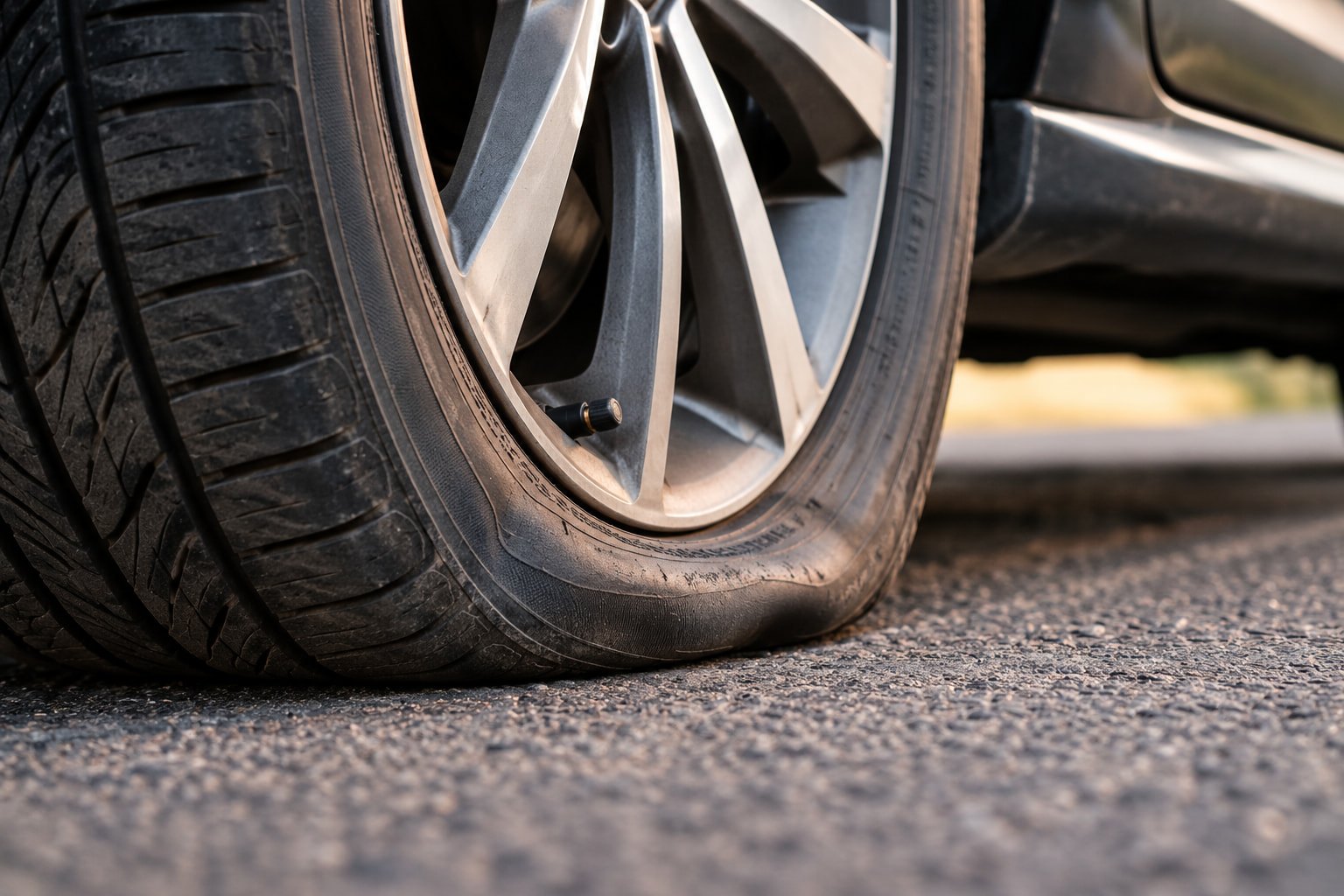
Why tyres lose pressure
Some pressure loss is normal. Air slowly permeates the rubber, the valve and the seal between the tyre and the rim, and a drop in air temperature lowers the reading without any air actually escaping. A tyre can also pick up a slow puncture from a nail or screw that seals around itself and leaks over days rather than minutes.
This is why a monthly check matters even on a car that seems fine. A tyre that has quietly lost a third of its pressure still looks close to normal, but it behaves very differently on the road.
What happens when a tyre runs low
An under-inflated tyre flattens more than it should where it meets the road. The sidewall flexes further with every rotation, which builds heat inside the tyre — and heat is what damages the casing and, in the worst case, leads to a sudden failure at speed.
- Longer stopping distances and vaguer steering, especially in the wet
- Uneven wear — the tread shoulders wear faster than the centre
- Higher fuel use, because the engine works harder against the extra rolling resistance
- More heat, raising the risk of a blowout on a long, hot or heavily loaded run
- A loaded vehicle or trailer makes all of the above worse
How to check pressure properly
A pressure reading is only meaningful when the tyre is cold — before driving, or after the vehicle has been parked for a few hours. Driving warms the air inside and raises the reading, so checking straight after a trip gives a false high number.
- Use the pressures on the vehicle's tyre placard, not the number on the tyre sidewall (that is a maximum, not a recommendation)
- Use a gauge you trust; many service-station gauges are inaccurate
- Check all four tyres and the spare
- Use the higher laden pressure when carrying a load or towing
- Re-check about a week after adjusting, in case a valve or tyre is leaking
Signs to act on
Some of these you can see in the driveway; others you only notice through the steering wheel or in how the car sounds as you drive.
- One tyre that always needs more air than the others — have it checked for a puncture or valve leak
- A tyre that looks visibly flatter than its pair
- Vibration, pulling to one side, or a change in road noise
- Tread worn more on both edges than in the middle
Monthly, and before any long trip
- Check pressures cold with a gauge you trust
- Set them to the placard figure for the load you are carrying
- Include the spare
- Look for cuts, bulges, cracking and objects in the tread
- Book a tyre in for inspection if it keeps losing air