
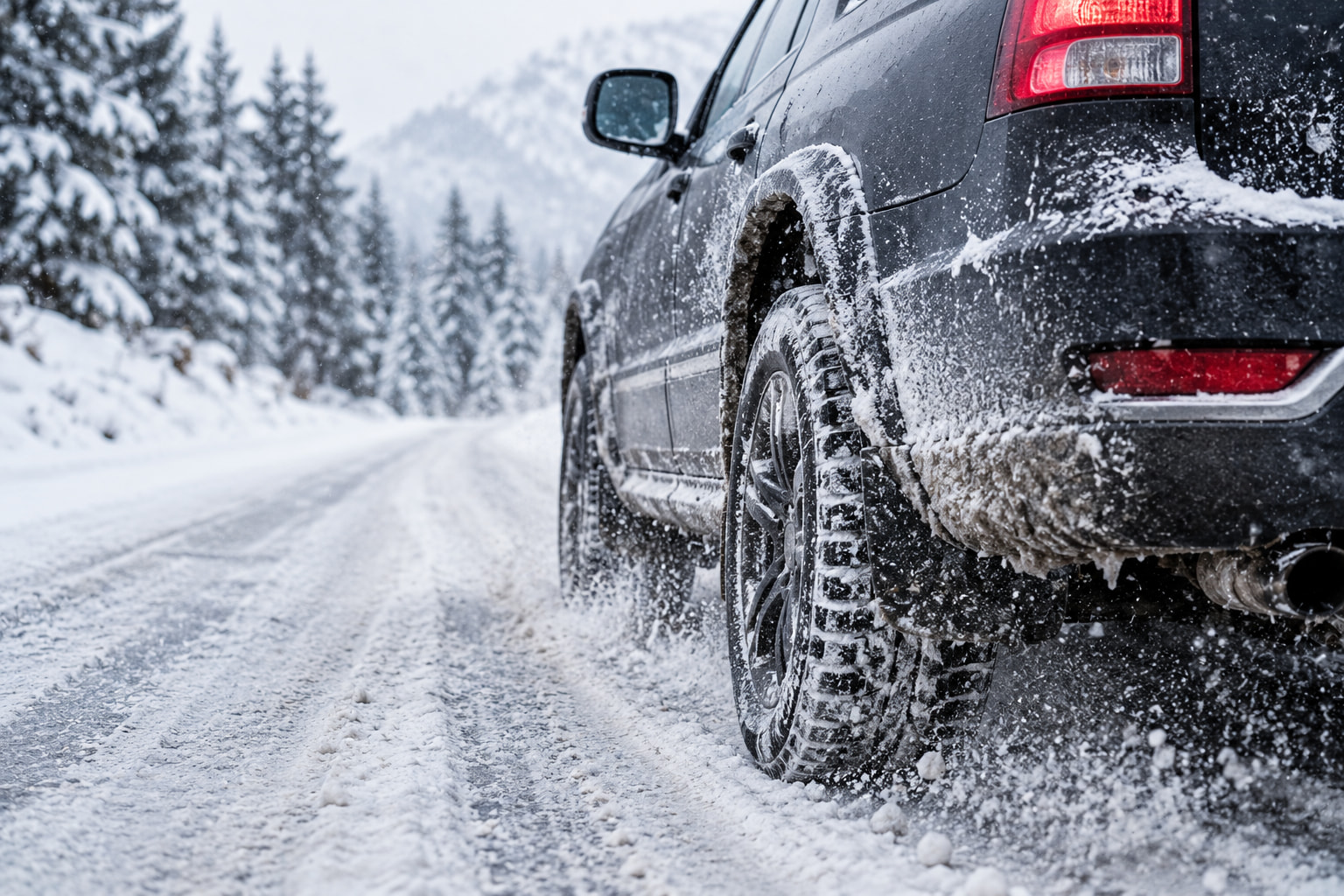
Tyres and pressures
Tread depth matters most in the wet: as a tyre wears it clears less water, so it takes longer to stop and is more likely to aquaplane. The general minimum tread depth in Australia is 1.5 mm across the tyre, but wet grip drops off well before that — confirm the requirement with your state or territory road authority, and consider replacing earlier if you do a lot of wet-weather driving.
Cold air is denser, so pressures fall as the temperature drops, often enough to notice between a warm afternoon and a frosty morning. Check pressures cold and set them to the placard figure.
- Check tread depth across the whole tyre, not just one spot
- Set pressures cold; expect them to read lower on cold mornings
- If you regularly drive in alpine areas, ask about tyres suited to cold and snow, and carry chains where they are required
- Make sure the spare is serviceable and correctly inflated
Low winter sun and fog
Winter mornings and afternoons bring the sun low to the horizon and straight into drivers' eyes, and valleys and low ground hold fog well after sunrise. Both cut how far ahead you can see and how well other drivers can see you.
- Keep the windscreen clean inside and out — glare is far worse through a filmy screen
- Carry sunglasses and use the sun visor when the sun is low
- In fog, slow down and use low-beam headlights and fog lights; the edge line of the road is a better guide than the centre line
- Do not use high beam in fog — it reflects back and makes seeing harder
Driving to the conditions
Cold, damp roads have less grip than they look, and the lower the temperature the longer tyres take to warm up to their best. Give yourself more room and make your inputs smoother.
- Increase your following distance — on a wet road, allow at least double the gap you would use in the dry
- Brake earlier and more gently; harsh inputs are what break traction
- Treat shaded patches, bridges and overpasses as potentially icy early in the morning — they freeze first
- If the road is icy, ease off the accelerator rather than braking, keep steering inputs small, and avoid sudden changes
Before you set off
A couple of minutes before you leave saves trouble later on.
- Clear all frost and condensation from every window and mirror, not just a patch to see through
- Check that lights, indicators and wipers work and that washer fluid is topped up
- Allow extra time so you are not rushing on a slower road
- For a long or remote trip in cold country, carry water, a blanket, a torch and a charged phone
Cold-weather check
- Tread depth and tyre condition, including the spare
- Pressures set cold to the placard figure
- All lights, wipers and washers working
- Windows and mirrors fully cleared before moving off
- Following distances increased for the conditions
- Chains carried if you are heading to an alpine area that requires them